

The Oracle — Psyche's Sisters
The VIII of Cups, Ace of Wands, and the call to transformation

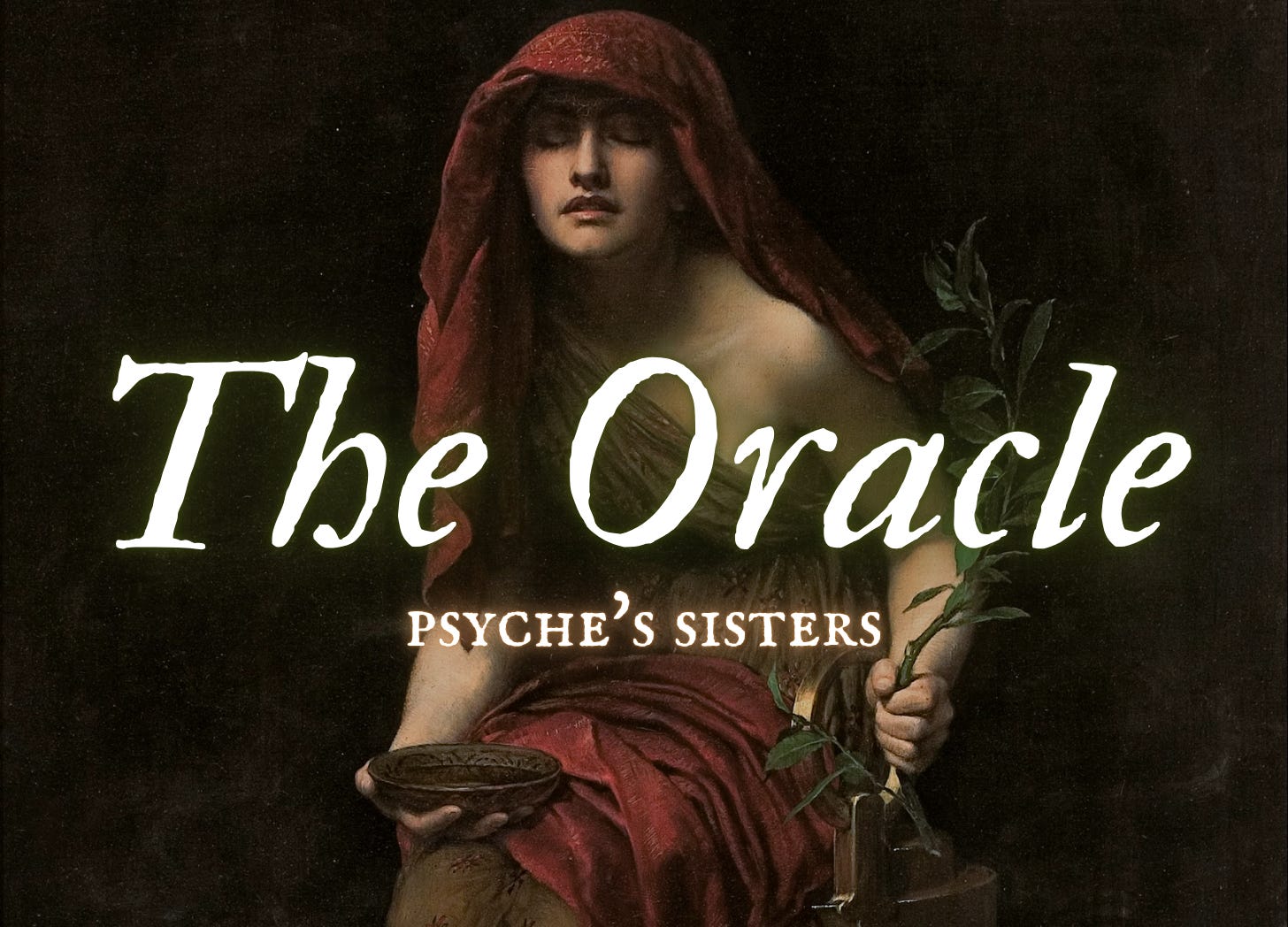
~ Welcome to The Oracle, a monthly divination to open the archetypal field through a blend of tarot and inner work practices. ~
The myth of Psyche and Eros has been lauded as a classic love story. It has all the elements of a complex romantic tale, so most of the attention has been focused solely on the lovers. Many psychological interpretations remain there, unpacking what it means to grow through romantic relationship—through ecstasy, projection, attraction, and tribulation.
Is the entanglement between Psyche and Eros the true driver of individuation? Let’s take a look at a short summary of the myth with this question in mind:
Psyche, a mortal worshipped for her extraordinary beauty, becomes the object of Aphrodite’s fury and vengeance. The goddess sends her son, Eros, to enact her revenge: shoot Psyche with an arrow so she falls in love with a hideous monster. Instead, Eros scratches himself and falls for Psyche.
Carried away to a mysterious and lavish home, Psyche is visited each night by her husband in the cover of darkness. She is forbidden to ever look upon him or know who he is. While visiting, her jealous sisters insist she has married a monster and that she must uncover his true identity. So the following night, she takes a dagger and lamp to confront him. Shockingly, there lies the god Eros, glorious and beyond anything Psyche could have possibly imagined.
In the midst of the reveal, she pours hot oil onto Eros, wounding him. Angered and betrayed, he takes flight, leaving Psyche bereft. To reconcile these wrongs, she is sent on a series of near-impossible tasks by Aphrodite, which she is only able to complete with the aid of unlikely helpers. Finally reunited with Eros, Psyche is granted immortality, is wed among the gods, and gives birth to their daughter.
Where might you identify the initiating moment that sets off Psyche’s journey?
Is it her god-like beauty that draws the ire of Aphrodite?
Is it Eros as deceiver and lover?
Is it the set of tasks (which eventually takes her to the underworld and to Persephone)?
Scholar, author, and professor of mythology, Christine Downing (who is perhaps one of my favorite modern interpertors of myth), offers a different way to view Psyche’s story:
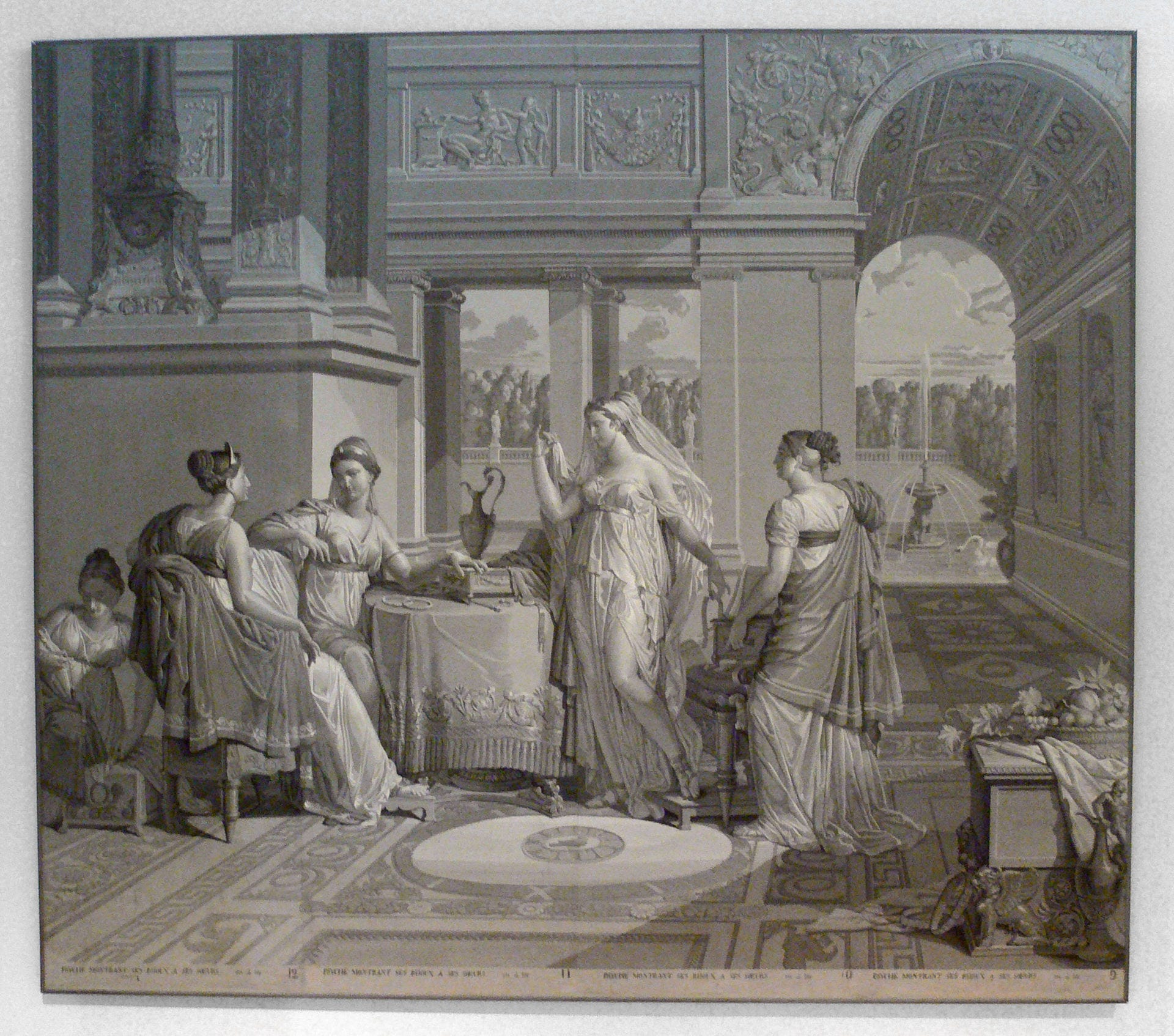
“I have come to see, it is the interactions among sisters that instigate the heroine’s journey toward self, toward psyche. This story in no way sentimentalizes sisterhood: Psyche’s sisters are envious and cruel—but they push her in the way her soul requires (whereas Eros would happily have kept her in the dark).”
Psyche’s Sisters: Reimagining the Meaning of Sisterhood
Before reading Downing’s work, I’d yet to come across an interpretation that centers the moment of initiation in the realm of sisterhood. Often, Psyche’s sisters are grouped into the classic trope: jealous siblings—the dark side of the personality—who only seek to deny, strip, and annihilate the vital essence of the heroine.
The power of sorority is subordinated to the power of romantic love. Yet, Eros is a lover who, if his will won out, would have kept Psyche unconscious. She would only know him through illusion and projection, a condition most of us are entrenched in when we enter into relationship with another.
There has to be something to break the fantasy, to create enough doubt or uncertainty so we get curious enough to investigate what is hidden in shadow. For Psyche, that is the moment her sisters question her secret-lover, when they provide the true first task: figure out who he is.
Armed with the symbols of discernment and the light of consciousness, Psyche enters their chamber, and all else flows from there…
If you feel called to explore Psyche’s story, I invite you to join us as we begin The Heroine’s Quest workshop series and inner work experience here at The Artemisian.
In our upcoming workshop, we’ll be diving into the symbolism of Psyche’s trials, the role of sisterhood, the interactions with the Great Mother archetype, and more.
Now, let’s turn towards The Oracle, to the tarot cards and practices that deepen our exploration of these themes.
Departure & the Gifts of Change
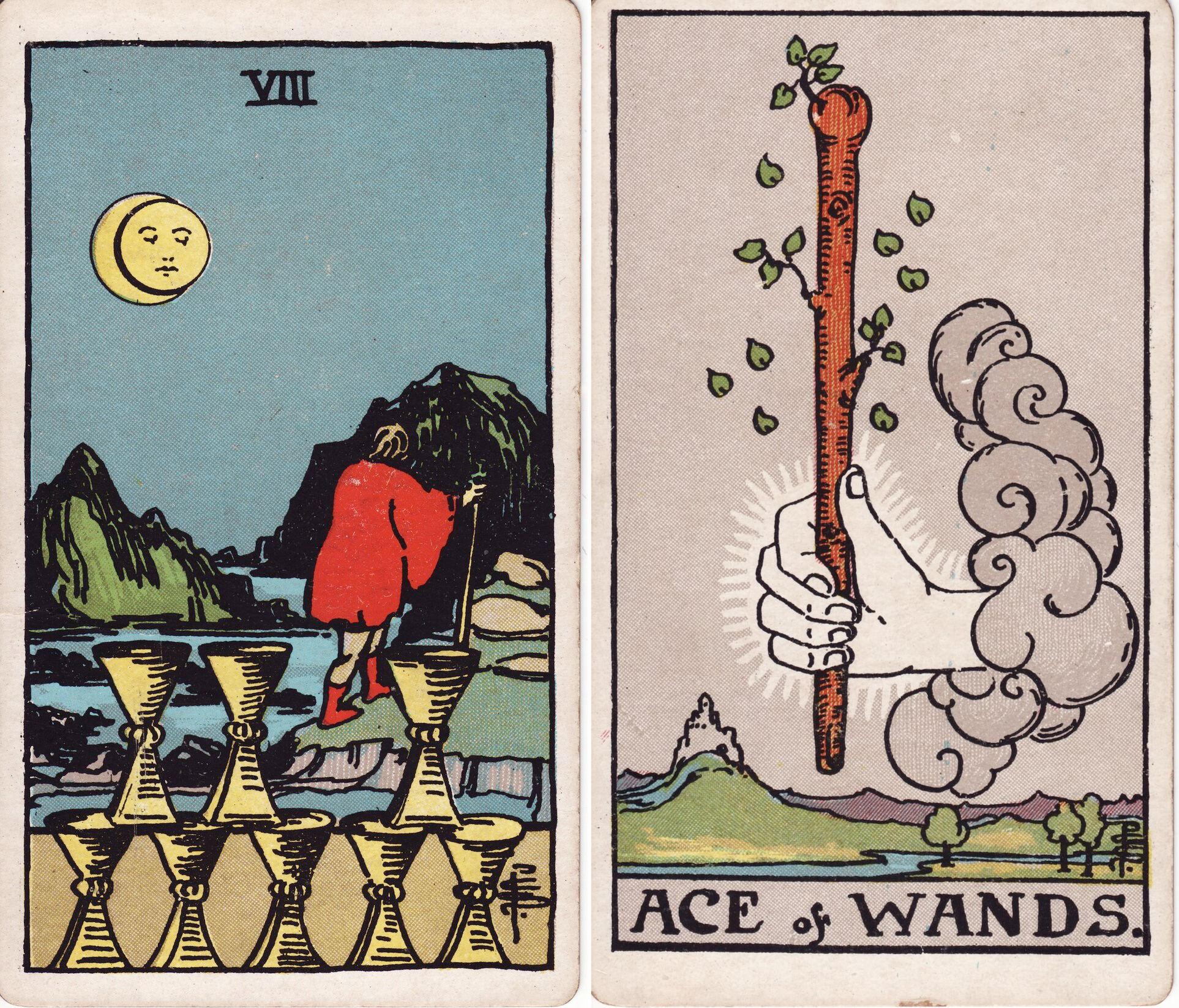
I’ve always felt the tinge of sorrow in the VIII of Cups, of all the sadness that comes when we leave something behind in search of something greater. A.E. Waite describes the card as, “the decline of a matter, or that a matter which has been thought to be important is really of slight consequence--either for good or evil.” Each cup, still perfectly upright, still full to the brim with something that was once felt as valuable, has lost its meaning.