


~ Welcome to The Oracle, a monthly divination to open the archetypal field through a blend of tarot and inner work practices. ~
For every fairy tale that is strange and whimsical (think talking animals, enchanted mirrors, and magical spirits in glass bottles), there are ones that are dark, ominous, and frightening: witches with murderous hunger, the devil come to strike a bargain, a quest that is most certainly a death wish.
Jungian analyst Marie-Louise von Franz, the foremost scholar of Jungian interpretations of folktales, tells us that, “Fairy tales are the purest and simplest expression of collective unconscious psychic processes.”
In essence, fairy tales are symbolic stories that have not been scrubbed of their archetypal oddities and nuances. They offer an honest accounting of the psyche’s range of life-giving and life-negating aspects, of its potent images and powerful influences that underlie consciousness.
Fairy tales must then show us the dark side of psychic experience, for without it we would have a mischaracterization of what it means to truly be alive. Whether the source of evil or destruction comes from within or without, the task remains the same: how can you meet this force with greater consciousness?
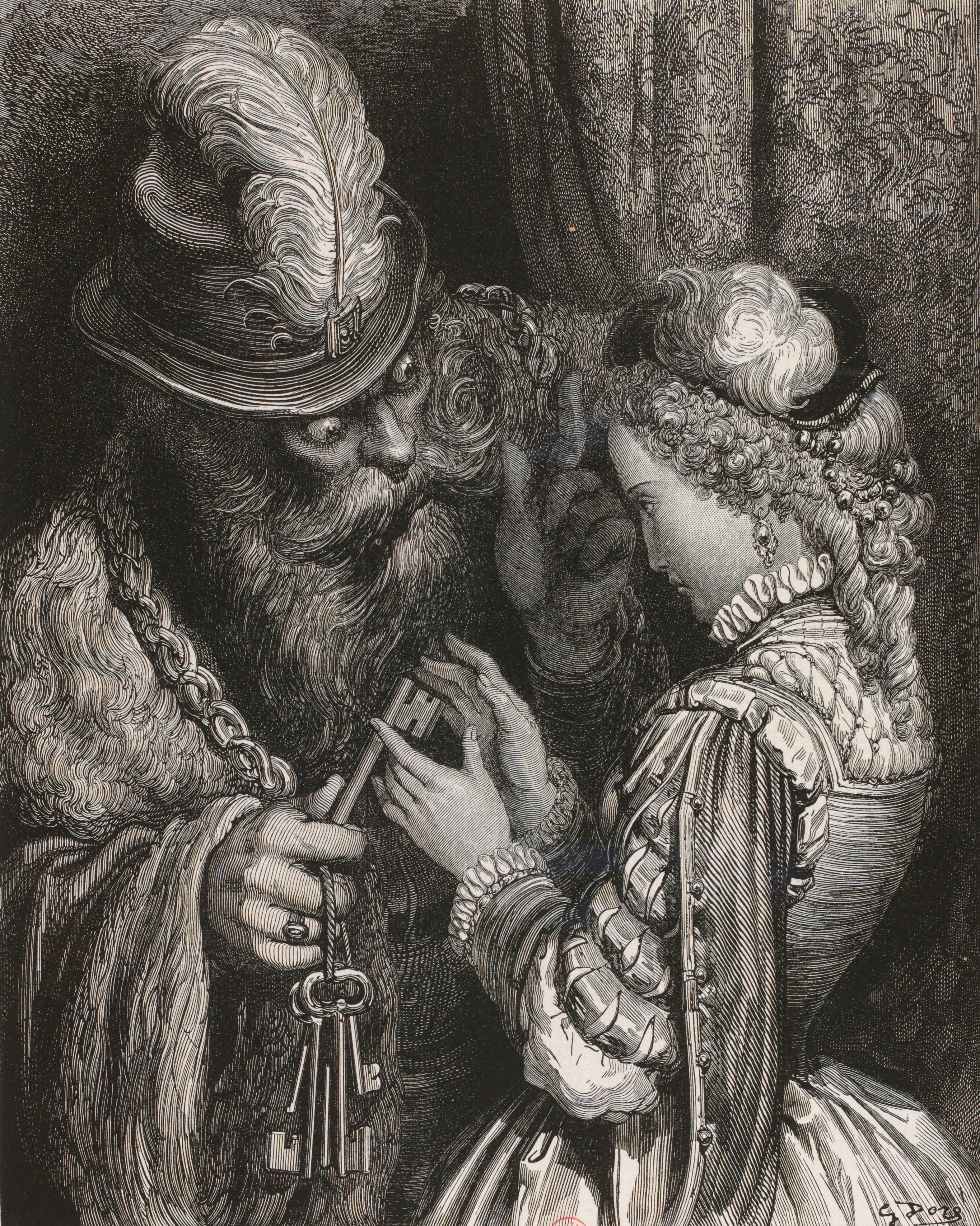
The French fairy tale Bluebeard is one of these dark tales, of a predatory force that seduces and seeks to slaughter the innocent psychic spark (the young heroine). An abridged version goes like this:
Once there was a powerful nobleman known as Bluebeard, whose strange beard frightened all who saw him, and whose many previous wives had mysteriously disappeared.
One day, he asks to marry the daughter of one of his neighbors. Though terrified of him and suspicious, the daughter eventually agrees after he hosts a lavish party.
After they have been married for a time, Bluebeard announces he must leave on a trip away. He gives his wife the keys to every room in the palace, telling her she may look through any room she wishes—except for one.
She agrees, and once he leaves, she invites her friends and family over for a party. They go through each room, enjoying the riches and splendor, but she cannot shake her nagging curiosity about the forbidden room down below.
So she heads down there, uses the forbidden key, and is horrified to find a room covered in blood with all of Bluebeard’s previous wives dead and hanging on the wall. She slams the door and runs away, but the key weeps blood, no matter how she tries to clean it.
When Bluebeard returns, he realizes she has disobeyed him and says she must now die in turn. She begs for a short time to pray, and he agrees. While she does so, she calls to her sister to watch for her brothers. They eventually arrive, kill Bluebeard, and free the young wife.
Jungian analyst Clarissa Pinkola Estés’ take—one of the most famous, and the one we will be studying this month—is especially illuminating on what the gruesome tale is speaking to.
“It is a tale of psychic naiveté, but also of powerfully breaching the injunction against “looking.” It is a tale about finally cutting down and rendering the natural predator of the psyche.”
Women Who Run With The Wolves
All of us, at some point in time, will come to find a Bluebeard insidiously at work in our lives. It may be a destructive complex that attempts to control and strangle psychic life, or a toxic job that demands everything of you and leaves you burnt out and barely hanging on.
Psychic naiveté is not bound by age, but ever-present when burgeoning aspects of the personality are ready to unfurl. Uninitiated into the woes of the world, relationships, or what looms in our own shadows, we are susceptible to devious and manipulative dynamics. Alternatively, if we carry painful wounds that corrode the seat of our self-worth (especially those of a relational origin), we are like to find ourselves drawn into situations when the promise of something wondrous blinds us from the poison that brews below.
Though it may not be obvious at first, these force will keep you trapped and slowly siphon off personal power and autonomy. The fairy tale, however, tells us that there is something that can be done! Through learning to listen to intuition and instinct, by following our psychic curiosities, by being brave enough to open the doors to hidden places we’d rather not see, we are not only freed, but transformed in the process.
If these themes capture your imagination and feel relevant, then perhaps you’d like to join us for The Heroine’s Quest workshop series and inner work experience happening now in the membership? Our studies continue this month with our exploration of Bluebeard.
In our upcoming workshop, we’ll be contemplating how the heroine’s curiosity and willingness to use the key acts as a force of revelation to contend with dark and destructive forces, as well as many other insights into the fairy tale.
There’s still time to join, check out the details below :)
Now, let’s turn towards the Oracle, to deepen our exploration of these themes.
The Hermit Lights the Way
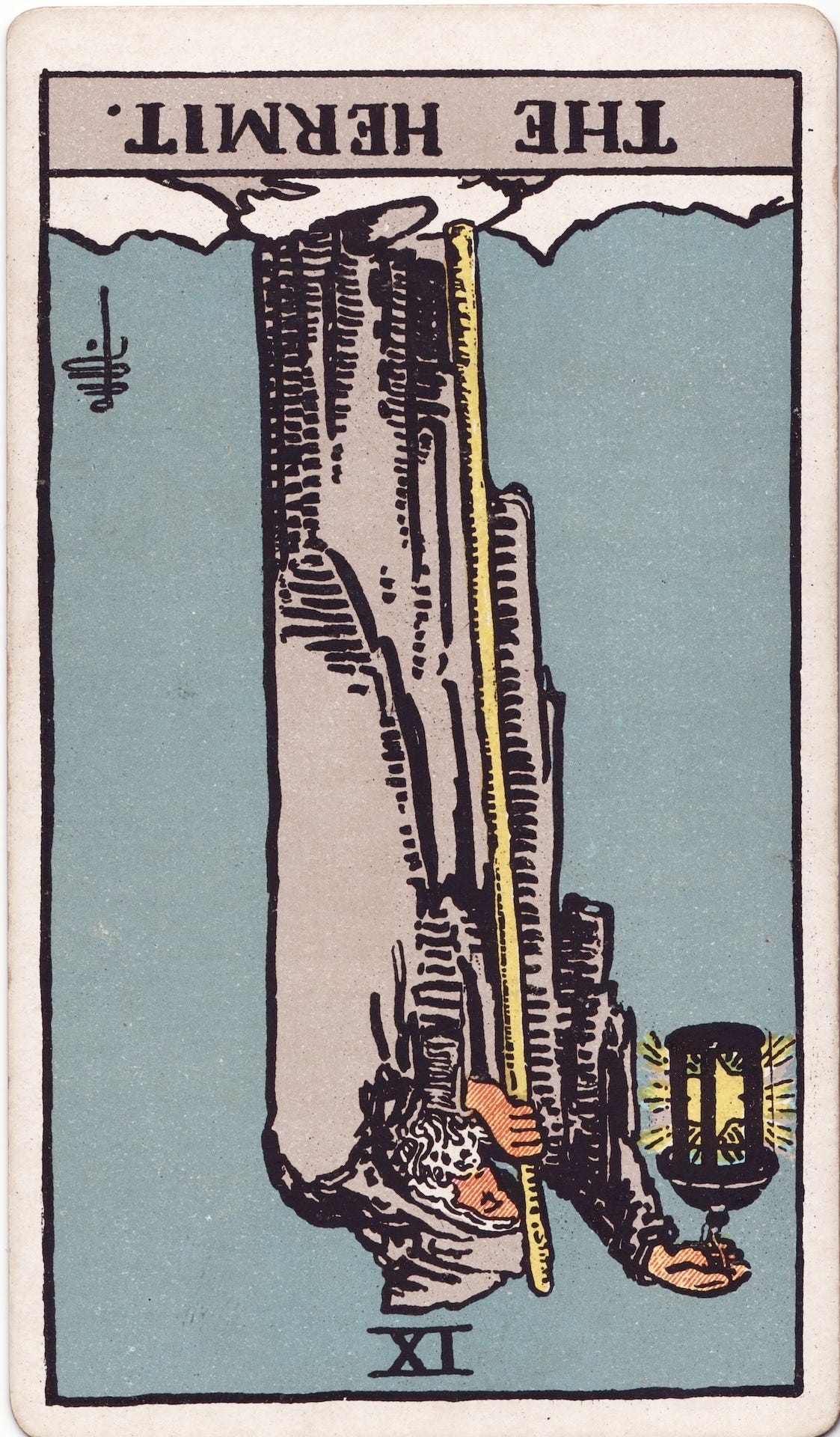
We might say that the denial and ignoring of intuition was the young heroine’s first critical mistake in Bluebeard. When the story begins, all those who interact with him feel repulsed—perhaps it’s the unnatural color of his facial hair or the dark aura that surrounds him. No matter what, there’s an instinctual knowing to stay away.
Even the sweet and innocent heroine feels this. But danger lures us away with promises of adventure and excitement and thrill. Something clouds our judgement and the intuitive messages that had initially told us the hidden truth are ignored.
Why does this happen?