

A Practical Guide to Discerning Intuition
Understanding intuition through a Jungian lens

Inner Work Guides is an educational series that explores Jungian and archetypal topics through a practical lens. Each guide offers insight into core inner work themes, frameworks for personal application, and curated resources. To help keep these offerings accessible and to support The Artemisian, consider upgrading to a paid subscription1.
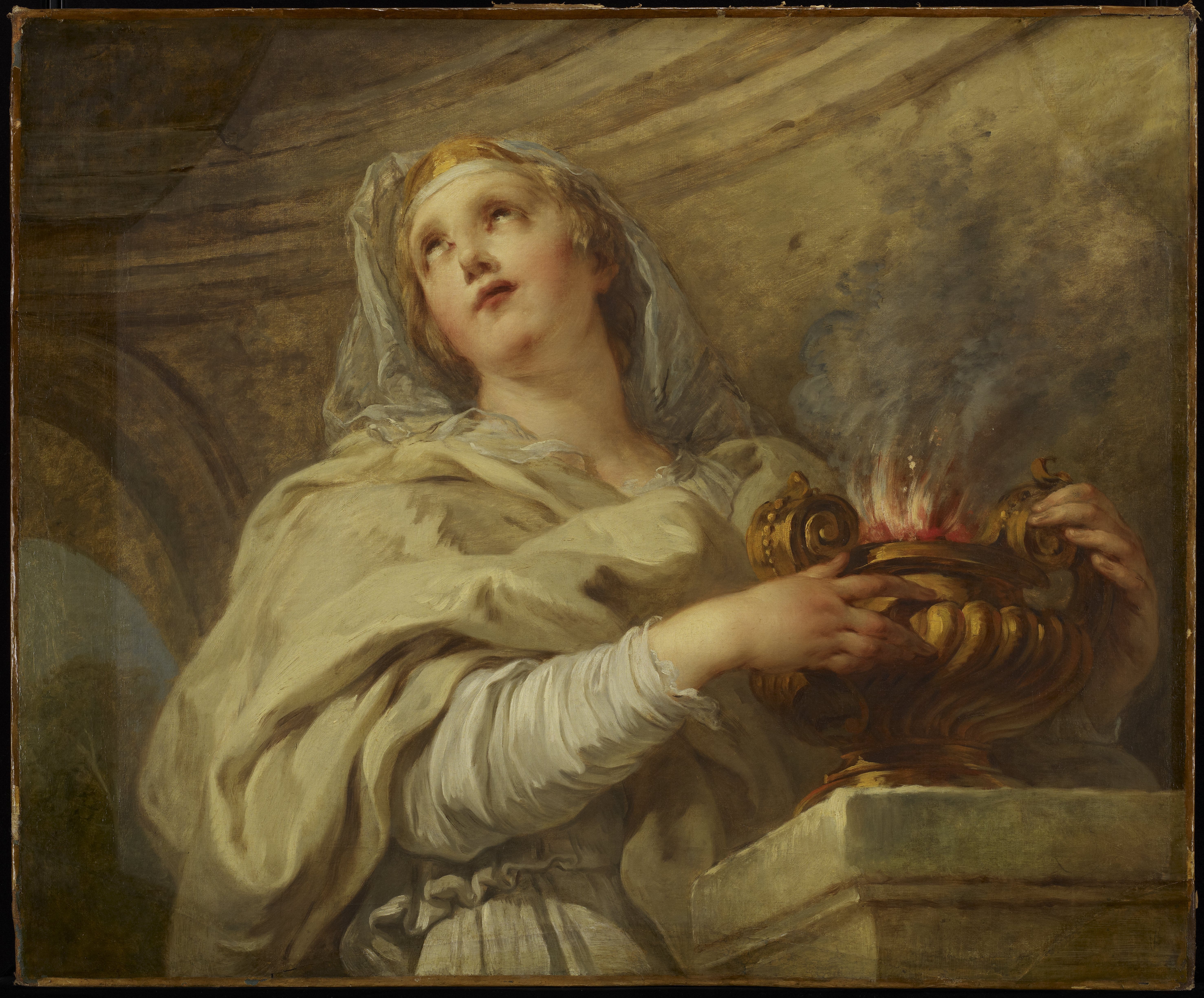
“I have a hard time trusting my intuition. How do I know if it’s real guidance or just my own desires or fears?”
The struggle to connect to, trust, and harness intuition is common. The moment of intuitive insight arises most unexpectedly, perhaps as a sudden knowing, a vision of potential, or a word of caution echoing in mind. Though it may pique our curiosity and grab our attention, we are often left wondering how real the experience was or how much faith we can place in it.
From my perspective, the issue is two-fold:
First, we often talk about intuition as a magical psychological faculty.
Exceedingly mysterious and difficult to understand, intuition appears to defy the laws of logic and dance around the rigid constructs of rationality. Shrouded in mystique, we may yearn for or idealize intuition, wishing we could tap into its supernatural essence. Or, we approach it with a great deal of mistrust and skepticism, writing it off as fantasy or self-delusion.
Second, we often talk about intuition as if it is only accessible to a select few.
Here, intuition is delivered from on high. Like the gifts of prophecy and foresight from the gods, intuitive abilities are walled off and held behind unreachable gates. Those who exhibit natural capacities for intuitive vision may be venerated or seen as particularly special and lucky. Or, on the flip side, as irrational, out of touch with reality, or inflated with grandeur.
This is where a Jungian approach becomes useful, grounding the concept of intuition in a psychologically informed framework that we can map onto internal and external experience.
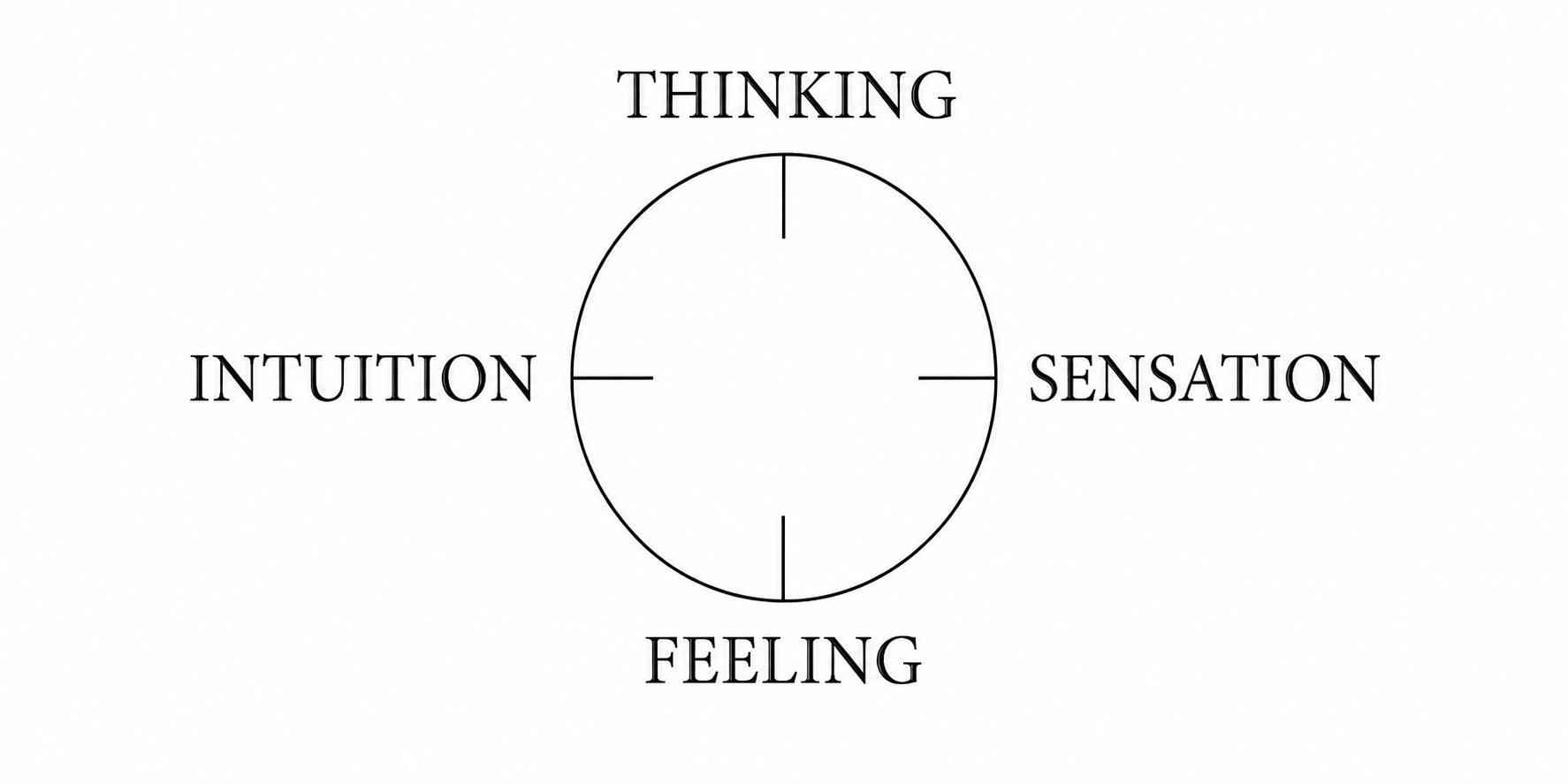
In Jung’s model of psychological types, there are four functions of consciousness2, grouped in complementary pairs:
Rational functions — evaluating and decision making
Thinking evaluates through logic and concepts, focusing on an objective, rational approach.
Feeling evaluates based on personal or collective values, focusing on relatedness and a sense of like or dislike, acceptance or rejection, etc.
Irrational functions — perceiving and information gathering
Sensation perceives through the physical senses, focusing on concrete, tangible experience and material reality as it is.
Intuition perceives via the unconscious, focusing on possibilities, symbolic insight, and connections that go beyond the obvious.
Our psychological type is made up of all four functions, arranged in various configurations based on a natural hierarchy and preference. For example, a thinking type is someone with a highly differentiated thinking function, characterized by their use of logic, rationality, and objectivity as they navigate life. They still utilize the other three functions, but with less mastery, ease, and conscious awareness than their dominant one.
In this framework, intuition is not a rare gift; it does not arise from magical origins, nor is it exclusive to an elite few. It is a basic mode of psychological functioning, accessible to all.
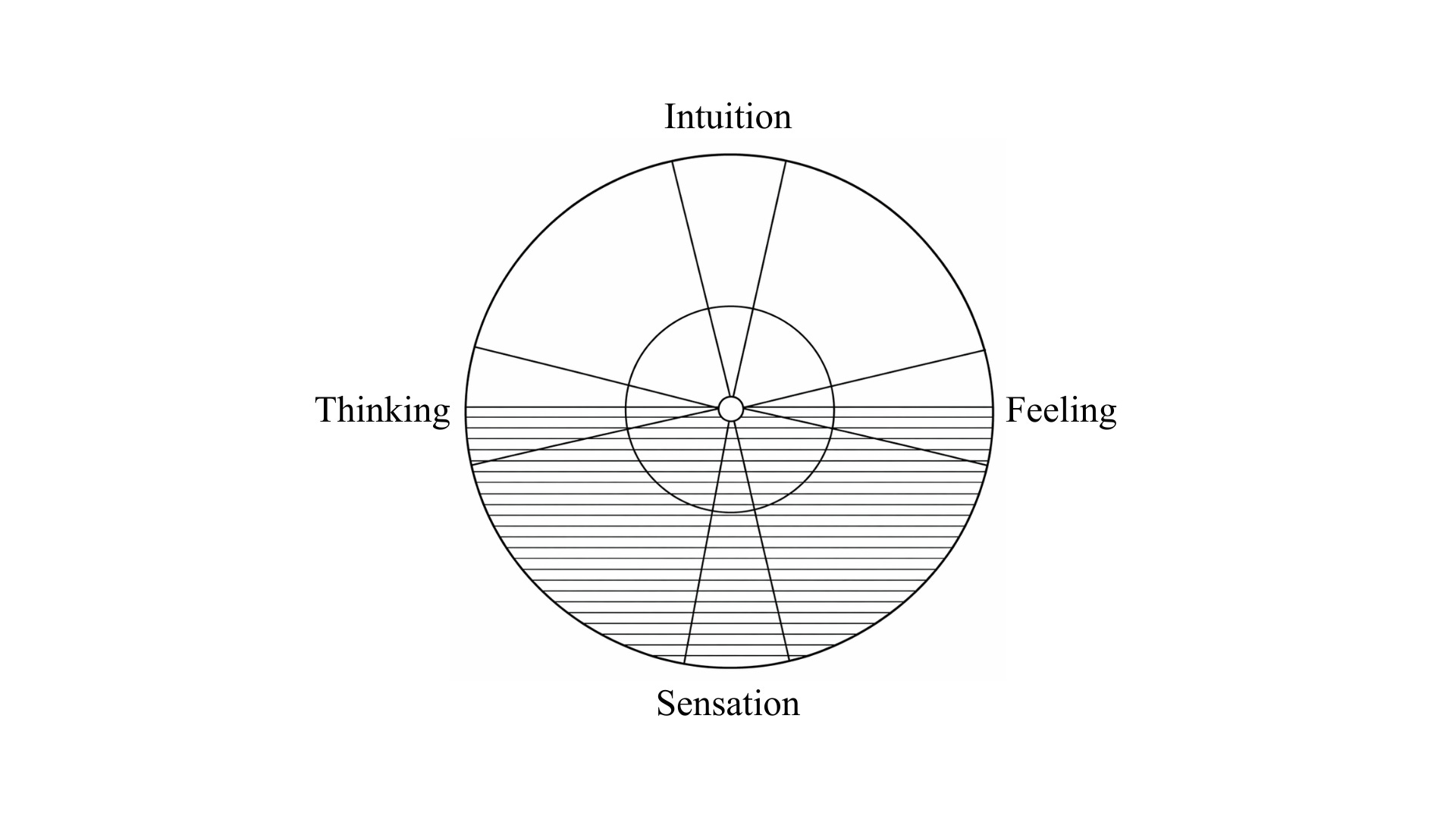
With that said, intuitive types3 (those who naturally prefer intuition and have it as the most differentiated function) tend to have a special relationship to it. This is where we find the mystics, oracles, visionaries, and prophets, the philosophers, inventors, entrepreneurs, and theorists who have an uncanny ability to see into the fabric of experience and channel it with clarity and symbolic vision.
Intuition is a psyche primed for openness to the unconscious. Insights may arise in any number of ways such as symbols, images, gut feelings, a sense of things “coming together”, dreams or fantasies, the connecting of patterns, or the picking up of emergent potentials. Casting aside concrete reality (the sensation function), the intuitive type immerses themselves in a sea of possibility, drawn to what can be and the archetypal forms that energize these ideas.
Engagement with the unconscious—especially if the material is of a highly archetypal origin—can feel charged with significance and is usually difficult to trace. This is what makes intuition feel beyond us, as coming from some divine or otherworldly source. In reality, what we are meeting is the shadowed realm of the psyche, the unconscious in its many forms.
Of utmost importance, we must remember that intuition is a fundamental building block of psychological life.
Building a deeper relationship with intuition means that we have to refine our awareness of how the unconscious communicates its perceptions. Each person may experience this differently, but there are some general principles that we can keep in mind to help this process along.
Discerning Intuition & the Messages of the Unconscious
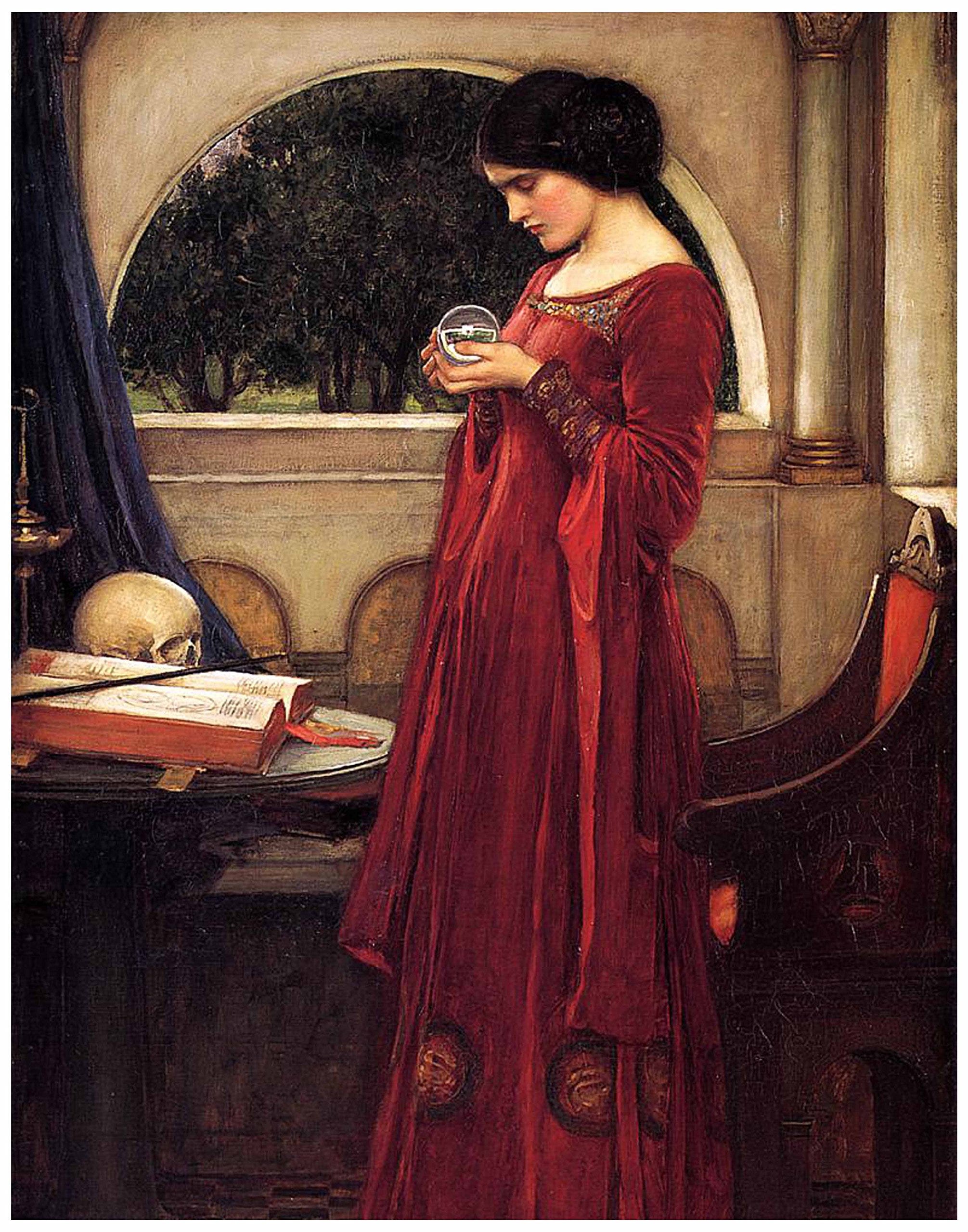
This guide sets its gaze on the tension that arises once an intuition flows into our awareness and how to navigate its discernment. If you’re interested in developing the intuitive function in general, I recommend checking out the resources listed below.
First, let’s take a look at this quote from Jung4:
“The utterances of the heart—unlike those of the discriminating intellect—always relate to the whole. The heartstrings sing like an Aeolian harp only under the gentle breath of a mood, an intuition, which does not drown the song but listens. What the heart hears are the great, all-embracing things of life, the experiences which we do not arrange ourselves but which happen to us.”
— C.G. Jung, The Symbolic Life (CW 18)
The biggest takeaways from this passage are that the movements of the deep psyche, which reverberate through intuition and into the heart of our being, happen to us and relate back to something greater and more complete. These words are, along with the theory we touched on earlier, the inspiration for the steps laid out below.
Let’s begin!
I. — Consider your psychological type.
Before getting caught up in evaluating an intuition, it’s important to figure out your psychological type. As we noted above, intuition is one of four functions of consciousness. Where it sits in your personality dictates how accessible or inaccessible it is.
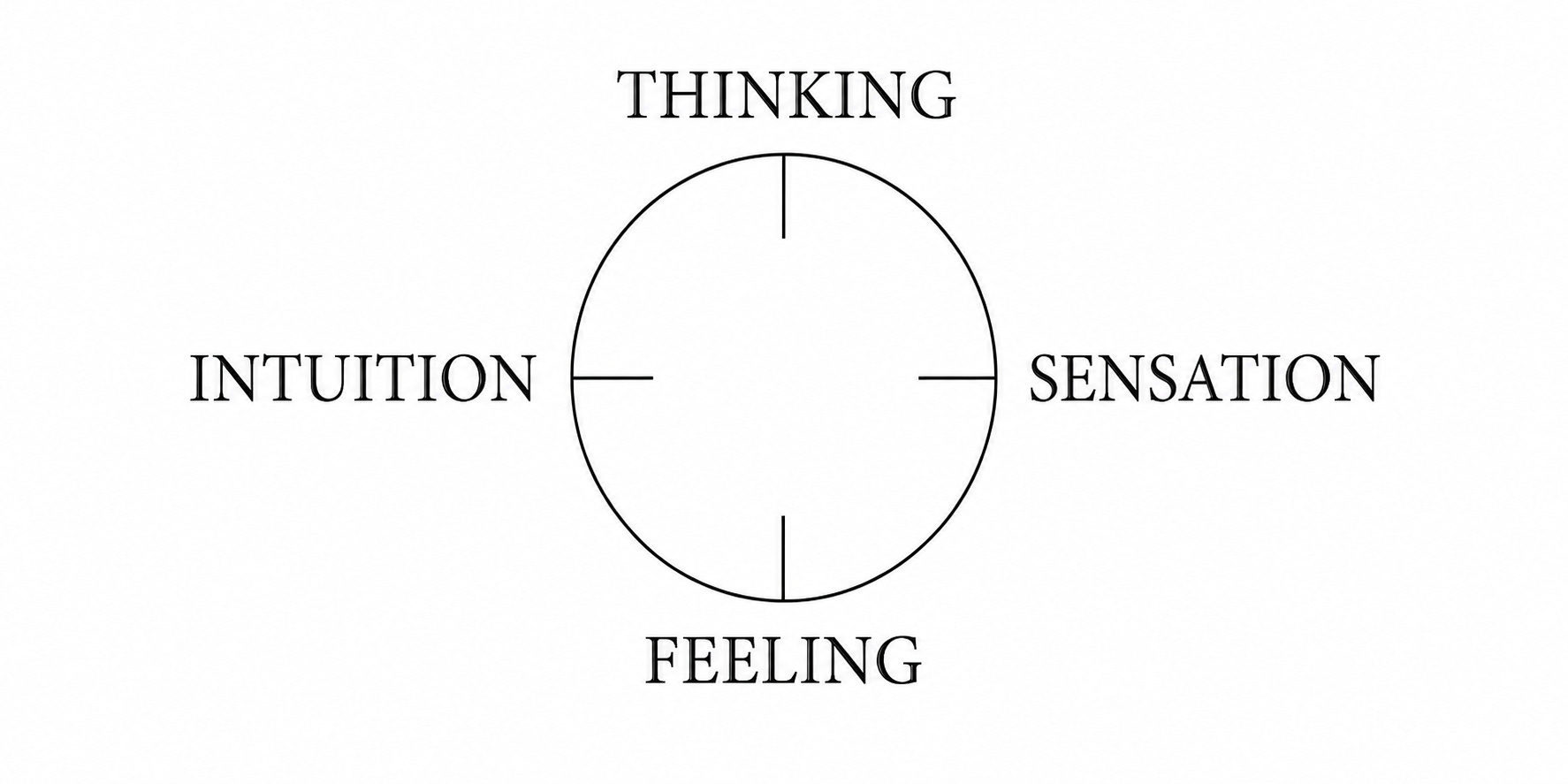
A simple (though oversimplified) way to explore this is to consider the two axes of the functions. Along each axis, you will have a natural preference for one function over another. This creates a general orientation, such as a preference for perceiving via sensation and evaluating through feeling (a sensate feeling type), etc.
When answering these questions, consider the psychological energy that motivates these actions, rather than the manifest behavior itself.
Rational Functions — Thinking or Feeling?
Which do you rely most on: logic, rational analysis, and objective or conceptual reasoning (thinking), or on personal/group values, relationality, and what feels appropriate or important (feeling)?
Irrational Functions — Sensation or Intuition?
Which do you feel naturally oriented towards: what is concrete, tangible, and directly observable (sensation), or possibility, abstract or symbolic connections, and visions of what can be (intuition)?
Keep in mind: If you have a natural preference for sensation over intuition, you might struggle to tap into, trust, or recognize intuitive insight. This doesn’t mean you can’t develop it, but there is a natural disadvantage.
Note: Though it’s not covered in this guide, each of the functions are modified by an extraverted or introverted orientation. See the resources below for more on this!
II. — Examine the quality of the intuition.
Perception via the unconscious means that, for the most part, we are unaware of the source and ways in which we receive information and insight. Rather than being situated in concrete, immediate reality, the intuitive function attunes us to the unconscious—to its images, symbols, and archetypal frameworks.
When discerning your intuitions, examine the quality of the experience. A genuine intuition will often:
Arise suddenly, without being prompted.
Feel difficult to locate or trace its source.
Be emotionally neutral, though emotions likely follow afterwards.
Have a sense of intensity and command, grabbing our attention.
Provide insight without explanation.
Feel profound, otherworldly, or outside of oneself.
Carry a sense of clarity and certainty.
Speaks to potential, possibilities, or previously unknown insights.
Manifest as images, symbols, a knowing, a gut feeling, a clear thought, a profound dream, etc.
Things tend to get muddied because our emotional responses or thoughts get mixed into the experience. Learning to separate these will help you in trusting and identifying a true intuition.
Keep in mind: Emotionally laden “intuitions” are more likely to be split off personal unconscious material (like complexes), rather than intuition itself.
III. — Situate the intuition within a larger context.
Now that you’ve examined the quality of the intuition, the next step is to place it within a larger context. Recall Jung’s words, that intuitions relate to the whole, to a broader pattern, or something more than the immediate situation.
Consider:
In what context did the intuition arise? Does that seem connected to a current tension, hope, conflict, or transformation?
Has this sort of intuition appeared before? If so, how might these situations be related?
How might this intuition be compensating, shifting, or balancing your current way of seeing a situation?
Do you notice patterns in how your intuitions are expressed? How might you lean into and develop this further?
What might the intuitions be asking you to recognize, engage, or change?
How might this intuition be tied to a broader arc of your individuation?
An example of the steps in practice…
I. — Consider your psychological type.
I am an intuitive feeling type. My life has been characterized by intense and clear intuitive perceptions since I was young. Most of the major decisions I make or shifts in my life are driven by intuition—like the sudden realization I had years ago that I should leave my full-time job in business and pursue my vocational calling.
II. — Examine the quality of the intuition.
At the time that I was considering leaving my job, the intuitive nudges were near constant. Their qualities included:
A deep knowing that it was the right move, although I couldn’t say why.
A recurring dream of adventuring into unknown territory.
A sense that I was begin given or provided with the insight, that the source was outside of myself.
Anxiety and uncertainty that always followed after. Upon examination, the intuition itself felt neutral or merely given.
A feeling of excitement and expansive opportunity to develop my craft and vocation.
III. — Situate the intuition within a larger context.
The intuitions kept arising in the midst of work and life, when I would feel comfortable or complacent. A sudden feeling would come over me, an image, or the thought, “I have to leave this place,” or “There’s more to life than this…” It felt as if the intuitions were challenging the image of my life that I had, how I defined success, or what I thought was possible.
As I entertained the ideas, surprising moments of synchronicity and opportunity began to occur. Unbeknownst to me at the time, this was the beginning of a new chapter, one that would become what you see here today (my work as a writer and educator). The intuitions were connected to the tides of individuation that were attempting to move me towards a greater purpose and alignment in life.
Recommended Resources
Books
Chapter 10, “General Description of the Types” in Psychological Types (CW 6) by C.G. Jung
Lectures on Jung’s Typology by Marie-Louise von Franz and James Hillman
Personality Types: Jung’s Model of Typology by Daryl Sharp
At The Artemisian
Developing Intuition (workshop)
Intuition and the Bridge of Perception (article)
You’re Not Just an Extravert or Introvert (article)
Let’s chat about intuition!
What is your relationship to intuition? Is it something you readily trust or struggle to navigate? How do you recognize and work with it usually?
And enjoy all the benefits that the membership has to offer. More info here!
Do these concepts sound familiar? They were directly borrowed and developed into the Myers-Briggs Type Indicator (MBTI), giving us the characteristic type codes such as INFJ, ESTP, ENTJ, ISFP, etc.
Sensate types (who have intuition as the inferior or most unconscious function) can also exhibit these uncanny abilities.
For all of Jung’s incredibly dense and academic writing, there are times when his words are written like poetry. These are some of my favorite passages, because they give us a feeling-toned experience of the psyche, images and words dripping with emotion, rather than being cold and conceptual.
Fascinating, thank you. I'm having a hard time discerning between intuition and sensation. Maybe because much through my childhood, especially teens and twenties when I traveled solo through several countries, I relied on a strong sense of intuition to keep me safe. I always considered myself a pretty intuitive person. I pick up on energies from people pretty quickly.
However, as I've gotten older and done lots of somatic therapy, I've learned to listen to my body in ways that use sensory perception as intuitive signals as well. Do I feel safe with this person? What is happening to my body, what is it trying to tell me? The lines between intuition and sensation become blurred as my intuition results in felt experience within my body.
I really enjoyed reading this, for the past years i’ve been really fascinated by Jung, as someone who makes a living doing tarot readings, i always found his quotes and ideas extremely enlightening, but sometimes i feel scared that maybe reading his texts id be too confused, but you really broke it down in a very easy to read manner.
And its been a curious case because tarot has been like a mirror that reflects back at me the intuitive pulls ive been feeling, as ways of confirming what my intuition tells me.